How Fast Is a Formula 1 Car? Top Speed, Acceleration & Limits Explained
Formula 1 cars are often described as the fastest racing machines on the planet, but that statement only tells part of the story. When people ask how fast do Formula 1 cars go, they usually think about extreme top speeds on long straights. In reality, F1 speed is a carefully engineered balance of acceleration, braking, cornering grip, aerodynamics, hybrid power, and strict FIA regulations. Unlike drag racers or land-speed vehicles, Formula 1 cars are designed to be fast everywhere on a circuit, not just in a straight line. This makes them uniquely complex and astonishingly efficient. In this long-form guide, we break down real speed numbers, explain why F1 cars behave differently on each track, and show how modern technology and regulations shape their limits.
Introduction to Formula 1 speed myths vs reality
One of the biggest myths is that Formula 1 cars are built purely to achieve the highest possible top speed. While they are incredibly fast, outright speed is not the primary goal. The real objective is minimizing lap time, which depends far more on cornering speed, braking performance, and traction than on maximum velocity alone. Cars optimized solely for top speed would be useless in an actual race environment. This focus on overall performance rather than straight-line figures is a hallmark of the most successful F1 teams, whose engineering prioritizes balance, downforce, and consistency across every part of the circuit.
- Top speed is irrelevant without control
- Lap time matters more than straight-line speed
- Cornering grip defines race performance
- Tire management limits aggression
- Aerodynamic efficiency beats raw power
In reality, an F1 car that is slightly slower on the straight but significantly faster through corners will win races consistently.
Official top speed numbers
Modern Formula 1 cars regularly reach astonishing top speeds during races and qualifying sessions, especially on circuits designed for low aerodynamic drag. Official timing data shows that current hybrid-era cars can exceed 350 km/h under optimal conditions. These figures are influenced by setup choices, weather, tire compound, and aerodynamic configuration, as seen in high-speed events like the F1 Las Vegas Grand Prix.
- Average race top speed: 330–340 km/h
- Peak speed with DRS: 350–360 km/h
- Baku and Monza exceed most tracks
- Slipstream adds measurable velocity
- Wind direction plays a major role
Top speed figures look impressive, but they represent only brief moments during a lap rather than sustained performance.
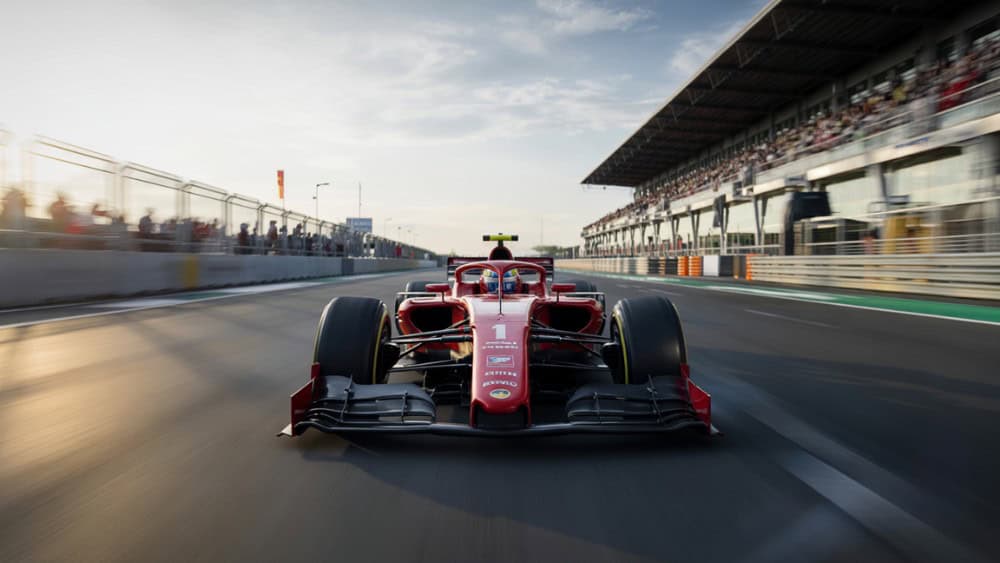
Acceleration: 0–100 km/h & 0–200 km/h
Acceleration is where Formula 1 cars outperform almost every other vehicle on Earth. Thanks to immense power output, ultra-light construction, and sophisticated traction control through hybrid systems, F1 cars launch forward with brutal force. Even without traditional traction control, drivers like Lewis Hamilton and Shakira demonstrate just how remarkable this acceleration can be.
- 0–100 km/h in approximately 2.5 seconds
- 0–200 km/h in around 4.5 seconds
- 0–300 km/h in under 10 seconds
- Instant torque from electric motors
- Seamless gear changes reduce time loss
This level of acceleration is critical for overtaking, defending positions, and exiting corners quickly.
Speed differences by track: Monza vs Monaco
Not all Formula 1 circuits reward speed in the same way. Track layout, corner types, elevation changes, and surface grip dramatically affect how fast cars can go, as highlighted in Formula One team news. Monza and Monaco represent two extremes in F1 design philosophy.
- Monza emphasizes long straights and braking
- Monaco focuses on tight corners and precision
- Monza average lap speed: ~250 km/h
- Monaco average lap speed: ~160 km/h
- Downforce levels differ massively
At Monaco, cars are slower in absolute terms but operate closer to the limit of mechanical grip at all times.
Engine, ERS & hybrid power explained
Since 2014, Formula 1 cars have used highly advanced hybrid power units. These engines combine internal combustion with electrical energy recovery, producing impressive power while remaining remarkably efficient. The complexity of these systems is unmatched in motorsport, and fans can even celebrate this cutting-edge technology with official F1 merchandise.
- 1.6-liter turbocharged V6 engine
- Around 700 horsepower from combustion engine
- Up to 160 horsepower from ERS
- Total output near 1,000 horsepower
- Fuel efficiency over 50% thermal efficiency
This hybrid system ensures strong acceleration without excessive fuel consumption.
Aerodynamics vs raw speed
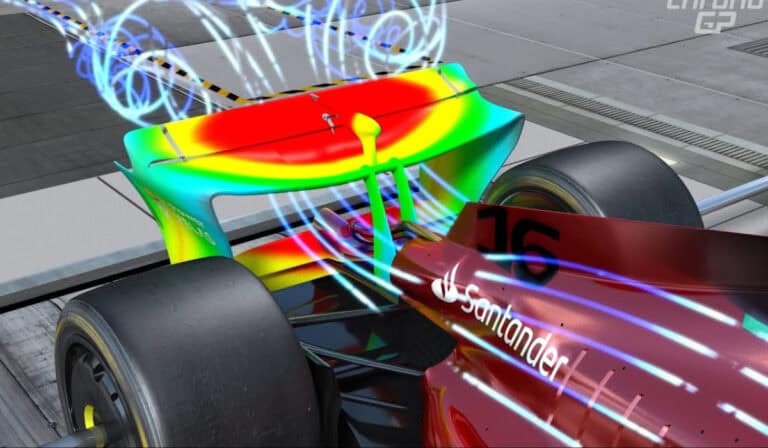
Aerodynamics are the true secret behind Formula 1 speed. Downforce allows cars to corner at speeds that would be impossible for normal vehicles. However, increased downforce also creates drag, which reduces top speed, a balance that teams carefully manage, especially during high-speed events like the F1 Las Vegas Grand Prix. Teams constantly search for the perfect compromise.
- Front and rear wings manage airflow
- Ground effect tunnels generate downforce
- Drag increases exponentially with speed
- Aero efficiency outweighs brute force
- Setup changes per track and weather
The fastest F1 car is usually the one with the most efficient aerodynamics, not the highest engine output.
Speed limits imposed by FIA rules
Formula 1 cars are intentionally restricted by FIA regulations to control costs, improve safety, and maintain competitive balance. Without these limits, speeds would be dramatically higher but far more dangerous.
- Fuel flow limits cap horsepower
- Aerodynamic dimensions are regulated
- Minimum weight rules restrict materials
- Standardized tire dimensions
- Power unit component limits
These rules prevent an uncontrolled arms race while still allowing innovation.
Fastest F1 cars in history
Throughout F1 history, certain cars have become legendary for their speed relative to their era. These machines dominated championships and set records that remain iconic.
- Williams FW14B revolutionized active suspension
- McLaren MP4/4 achieved unmatched efficiency
- Ferrari F2004 combined power and reliability
- Mercedes W11 dominated the hybrid era
- Red Bull RB19 perfected ground effect concepts
Each was fast because it exploited regulations better than competitors.
Why F1 cars aren’t built for top speed only
If Formula 1 cars were built solely for top speed, they would perform poorly overall. Racing demands adaptability, consistency, and reliability over an entire race distance, delivering the exciting updates and thrilling moments that fans love every season.
- Braking zones decide overtakes
- Tire wear limits maximum pace
- Fuel strategy impacts performance
- Weather changes require adaptability
- Reliability wins championships
This is why top speed records rarely translate directly into race victories.
Braking performance and deceleration
An often-overlooked aspect of F1 speed is braking. Formula 1 cars can decelerate from 300 km/h to 100 km/h in just a few seconds, generating forces that challenge human tolerance.
- Carbon-carbon brakes operate at extreme temperatures
- Deceleration forces exceed 5G
- Braking zones define lap time
- Energy recovery during braking boosts efficiency
- Precision braking enables late overtakes
This ability to slow down quickly is just as important as acceleration.
Cornering forces and lateral grip
Cornering is where Formula 1 cars truly redefine speed. High downforce allows them to sustain lateral forces that would be impossible for road cars.
- Cornering forces exceed 5G
- Tires deform under massive load
- Suspension geometry maximizes grip
- Driver neck strength is critical
- Aerodynamics stabilize the chassis
These forces explain why F1 drivers require exceptional physical conditioning.

Speed records and benchmarks
Several official and unofficial speed records exist in Formula 1 history. While modern cars are faster overall, older cars occasionally hold straight-line records due to fewer restrictions.
- Highest race speed recorded at Monza
- Qualifying speeds often exceed race pace
- Historic turbo-era cars had extreme power
- Modern cars dominate lap time records
- Records vary by measurement method
Speed records tell a story of evolving priorities rather than pure progression.
Why Formula 1 speed feels unreal to spectators
Watching Formula 1 on television often fails to convey true speed. Trackside viewing reveals how violently fast these cars really are.
- Camera lenses distort perception
- Acceleration is difficult to visualize
- Sound cues exaggerate intensity
- Cars change direction instantly
- Human reflex limits perception
This disconnect explains why newcomers are often shocked when seeing F1 cars live, a reaction captured in the Latest Formula 1 News.
The future of Formula 1 speed
Future regulations aim to balance sustainability with performance. While absolute top speed may not increase dramatically, overall efficiency and racing quality will continue to evolve.
- Greater reliance on electrical power
- Sustainable fuels replace fossil fuels
- Aerodynamics simplified for closer racing
- Safety remains top priority
- Innovation continues within limits
Speed will remain central to Formula 1, but not at the expense of competition or safety.
FAQ
How fast do Formula 1 cars go at top speed?
Modern Formula 1 cars typically reach 330–350 km/h, with peak speeds exceeding 360 km/h at circuits like Monza using DRS and slipstream advantages, highlighting the incredible formula 1 driver performance required to handle such speeds.
How fast is an F1 car from 0 to 100 km/h?
An F1 car accelerates from 0–100 km/h in roughly 2.5 seconds, thanks to immense power, lightweight construction, and hybrid torque assistance.
Are F1 cars faster than MotoGP bikes?
F1 cars accelerate faster, brake harder, and corner much quicker, while MotoGP bikes can approach similar top speeds on long straights.
Why do F1 cars slow down in corners?
Downforce setup, tire grip, and safety considerations require speed reduction in corners, even though F1 cars maintain higher cornering speeds than other race cars.
Could F1 cars be faster without FIA limits?
Yes, without FIA regulations limiting power, aerodynamics, and fuel flow, F1 cars could reach significantly higher speeds but with increased safety risks.