Formula 1 aerodynamics explained see the guide on downforce and winning championships
Aerodynamics is the invisible hand guiding every Formula 1 car around the track. From blistering straights to tight corners, airflow management determines speed, tire wear, and overall performance. Every contour, wing, and floor design is optimized to create downforce without excessive drag, making the difference between pole position and mid-pack finishes. Understanding F1 aerodynamics is not just for engineers—it explains why some cars dominate a season while others struggle despite similar engines. This guide dives into the principles of downforce, wing design, ground effect, DRS, CFD testing, and landmark innovations that define modern Formula 1.
Why Aerodynamics is Critical in F1
Aerodynamics defines how efficiently an F1 car cuts through the air while generating grip and stability.
- Determines cornering speed through downforce
- Balances front and rear stability
- Reduces drag to maximize straight-line speed
- Influences tire longevity and fuel efficiency
Efficient aerodynamics allow a car to maintain higher speeds through corners and straights, directly impacting lap times. This focus on airflow refinement is at the heart of motorsport legacy, with teams investing millions, as even minor improvements can yield tenths of seconds per lap—enough to decide championships.
Downforce vs Drag Explained
Downforce presses the car onto the track, while drag resists motion. Understanding the trade-off is key.
- High downforce increases grip in corners
- Low drag maximizes top speed
- Excessive downforce can create unnecessary tire wear
- Engineers constantly optimize for track layout
Balancing downforce and drag is a delicate art. Finding the perfect compromise—the aerodynamics Edge—is crucial: on twisty circuits like Monaco, maximum downforce is prioritized, while high-speed tracks like Monza favor low-drag setups. Sophisticated simulations and wind tunnel testing are used to achieve this balance.
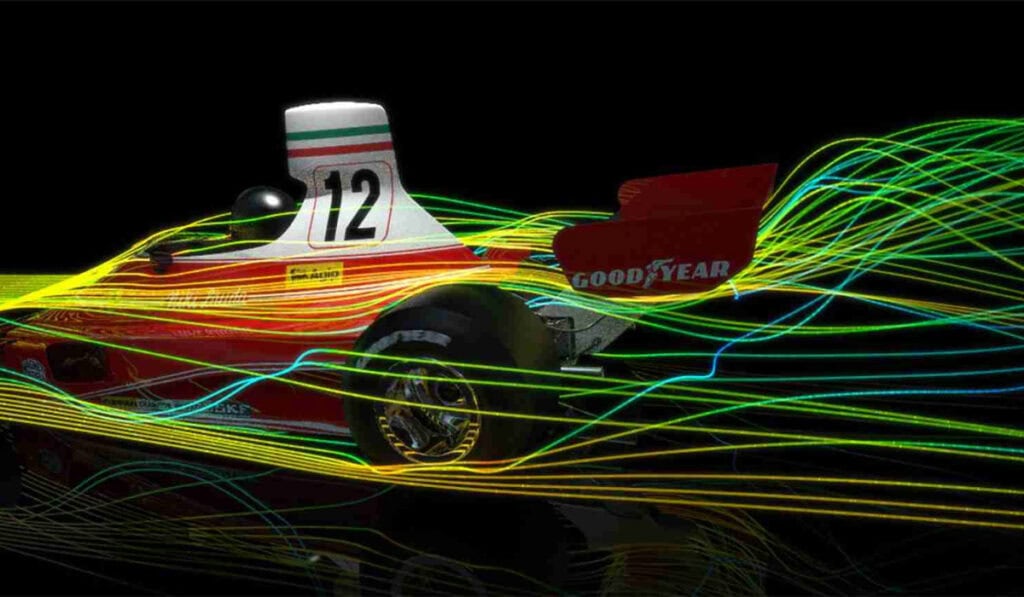
Front Wing, Rear Wing & Floor
Every aerodynamic component contributes to overall performance.
- Front wing channels airflow to optimize downforce and balance
- Rear wing stabilizes the rear at high speeds
- Floor generates ground-effect suction
- Wing angles can be adjusted per track conditions
The front wing is the first point of contact with the air, shaping how it flows around the tires and the car body. The rear wing helps counter oversteer and improves traction, while the floor generates a low-pressure zone under the car, increasing grip—just like Lewis Hamilton relies on every aerodynamic detail to extract maximum performance on the track.
Ground Effect Era Explained
Ground effect uses airflow under the car to generate massive downforce efficiently.
- Side skirts and tunnels accelerate air under the chassis
- Creates a suction effect to “stick” the car to the track
- Reduces dependency on large wings
- Historically banned and reintroduced with modern F1 rules
Ground effect lets cars corner faster without adding much drag. Teams use Venturi tunnels in the floor to shape airflow and boost efficiency. Modern F1 regulations have reintroduced controlled ground effect to improve racing and reduce dirty air for following cars, a factor that even the top 5 F1 drivers take into account.
DRS System
The Drag Reduction System (DRS) is a modern tool that temporarily reduces drag to aid overtaking.
- Opens rear wing flap to reduce aerodynamic resistance
- Only usable in designated zones and under certain conditions
- Helps faster cars pass competitors
- Reduces cornering downforce when activated
DRS fundamentally changes strategy, allowing drivers to time overtakes with precision. Technological innovations in Formula 1 mean engineers must design cars that remain stable with occasional drag reduction without compromising cornering performance, all while improving the racing spectacle.
Wind Tunnel & CFD Testing
Aerodynamic research relies on both physical and digital simulations.
- Wind tunnels provide scale-model testing for airflow and downforce
- Computational Fluid Dynamics (CFD) simulates complex aerodynamic behavior
- Speeds up development cycles
- Validates track data for adjustments
Wind tunnel and CFD data allow engineers to visualize airflow around wings, brake ducts, and floors. This insight leads to more efficient designs and informs race strategy, especially when regulations restrict development during the season.
Regulation Changes Impact
F1 rules constantly evolve, directly affecting aerodynamic design.
- Wing size, height, and angle restrictions
- Limits on ground-effect tunnels
- Standardized components to reduce costs
- Impact car balance and overtaking potential
Regulations are intended to balance performance and safety. Teams adapt by finding creative solutions within the rules, often leading to revolutionary concepts that redefine car performance for the season, ultimately shaping overtaking in Formula 1.
Famous Aerodynamic Innovations
Throughout F1 history, certain innovations reshaped performance.
- Double diffuser (2009) increased downforce legally
- F-duct (2010) controlled airflow to rear wing
- Blown diffusers manipulated exhaust gases
- Front-wing endplate designs optimized airflow to rear tires
These breakthroughs often prompt rule changes and become benchmarks for competitors. Engineers, including leaders like Vasseur Frédéric, constantly study both historical and current innovations to push boundaries legally and gain an advantage on track.
Future of F1 Aero
Aerodynamics will continue to evolve, driven by performance and sustainability.
- Focus on reducing turbulent air for closer racing
- Integration of hybrid systems with airflow optimization
- Smart materials to adjust aero dynamically
- Emphasis on efficiency over raw downforce
The 2026 regulations will further prioritize close racing and energy efficiency. Expect innovative floor designs, more subtle wingwork, and integrated energy recovery systems to influence how cars generate and manage downforce.
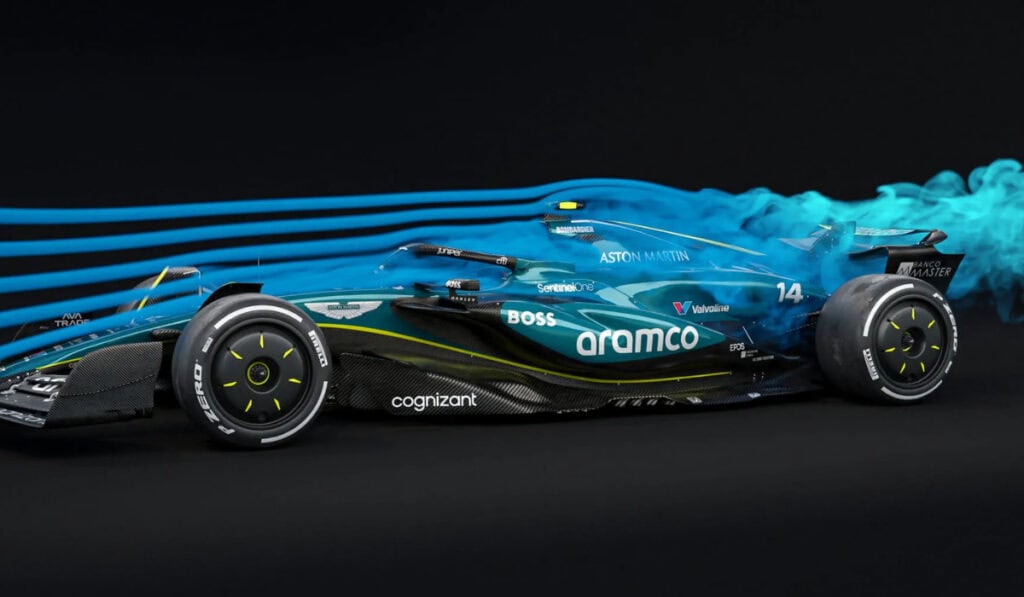
Aerodynamic Components Interaction
Understanding how individual components interact is crucial.
- Front wing airflow affects tire wake and floor performance
- Rear wing influences diffuser efficiency
- Brake ducts shape airflow while cooling
- Suspension design interacts with aerodynamic load
Poor interaction can cause instability or drag penalties. Formula 1 racing dynamics require teams to use simulations and track testing to ensure all parts work harmoniously. This approach maximizes performance while keeping the car predictable for drivers, allowing them to push the limits safely on track.
Track-Specific Aero Setup
Each circuit demands a unique aerodynamic approach.
- High-downforce setup for street circuits
- Low-drag setup for long straights
- Adjustments to balance understeer and oversteer
- Compromise between qualifying speed and race tire management
The perfect setup is a trade-off between raw speed and drivability. The most successful F1 teams carefully consider weather conditions, tire degradation, and traffic patterns to optimize aerodynamics for each event, ensuring consistent performance across different tracks.
Conclusion
Formula 1 aerodynamics is not just technical—it’s strategic. Every curve, wing adjustment, and airflow channel affects lap times and championship outcomes. Teams balance downforce, drag, and tire wear while navigating strict regulations, ensuring both performance and safety. Future advancements in materials, CFD, and ground-effect efficiency promise even more thrilling races. Understanding aerodynamics helps fans appreciate the complex engineering that turns raw power into championship-winning speed. The interplay of science, design, and driver skill makes F1 an unparalleled showcase of high-performance technology, highlighting the F1 driver of the day.
FAQ
What is the primary goal of F1 aerodynamics?
The main goal is to maximize downforce for cornering grip while minimizing drag to maintain top speed, balancing stability, tire wear, and performance throughout a race weekend.
How does ground effect improve car performance?
Ground effect accelerates airflow under the car, creating low pressure that “sucks” the car to the track, increasing cornering speed without significantly adding drag.
What role does DRS play in aerodynamics?
DRS temporarily reduces rear-wing drag to assist overtaking. It only operates in designated zones and affects stability, requiring careful car setup to maintain balance.
How do CFD and wind tunnels complement each other?
CFD digitally simulates airflow around components, while wind tunnels test scale models physically. Together, they refine design accuracy, validate data, and reduce development cycles.
Which F1 innovations changed aerodynamic design most?
Double diffusers, F-ducts, and blown diffusers are landmark innovations that manipulated airflow to increase downforce legally, inspiring rivals and shaping modern aerodynamic philosophies.