F1 Testing Analysis: Red Bull, Ferrari, Mercedes and More
Formula 1 testing is one of the most exciting periods of the season because it gives fans and experts the first real look at how teams may perform before the championship begins. During pre-season testing, teams evaluate reliability, aerodynamics, tire management, race pace, and qualifying simulations. Although lap times do not always reveal the full picture, testing offers valuable clues about which teams could dominate and which teams may struggle.
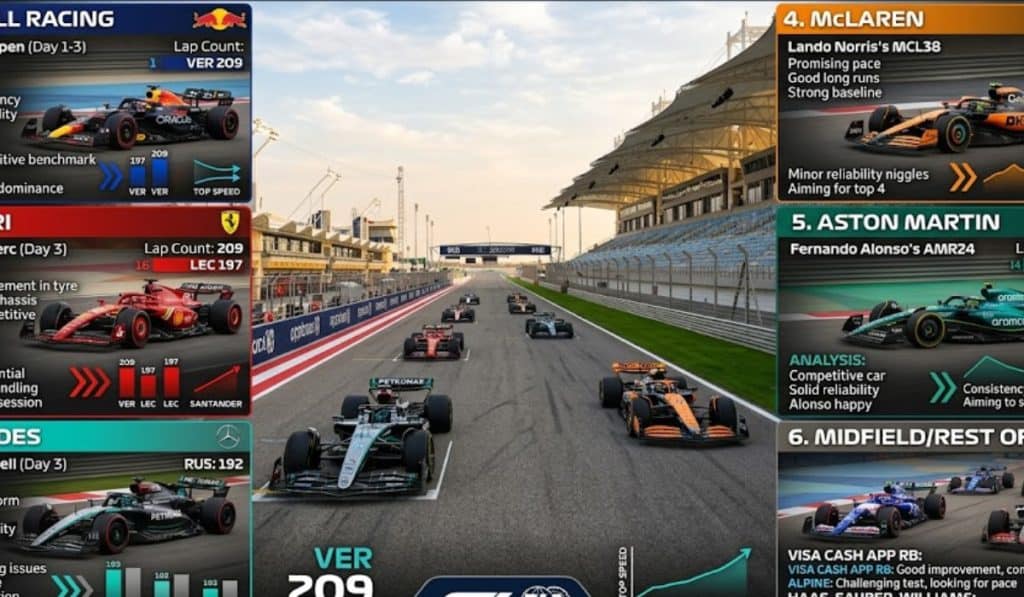
This year, Red Bull F1 testing, Ferrari F1 testing, Mercedes F1 testing, McLaren F1 testing, Aston Martin F1 testing, Williams F1 testing, and Alpine F1 testing have all attracted major attention. Each team entered testing with different goals, technical upgrades, and expectations for the new Formula 1 season.
Why F1 Testing Is So Important
Pre-season testing is much more than setting fast lap times. Teams use testing sessions to understand how their cars behave under different track conditions and fuel loads.
Reliability Checks
One of the main priorities is reliability. Teams want to ensure that the engine, gearbox, brakes, cooling systems, and electronics can survive long race distances without issues. A reliable car allows drivers to push harder during race weekends, and this is often evaluated through F1 testing results, where teams analyze performance consistency and durability before the season begins.
Aerodynamic Analysis
Teams also study airflow around the car. Engineers use sensors, aero rakes, and flow visualization paint to measure aerodynamic efficiency. Small improvements in airflow can dramatically improve lap times during the season.
Tire Management
Modern Formula 1 races are heavily influenced by tire degradation. Testing helps teams understand how quickly tires wear out and how the car performs on different compounds, making F1 testing 2025 a key reference point for evaluating pace, strategy, and long-run performance before the season’s competitive sessions begin.
Red Bull F1 Testing Analysis
Red Bull entered testing as the reigning benchmark team in Formula 1. Expectations were extremely high after their dominant performances in recent seasons.
Strong Race Pace
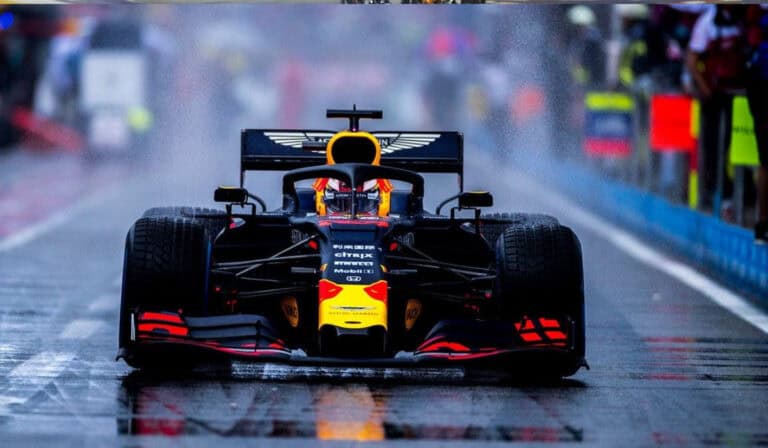
Red Bull immediately impressed with consistent long-run pace. Their car appeared stable in high-speed corners while maintaining excellent traction out of slower sections. Many analysts noticed that the car looked easy to drive, which is often a sign of strong aerodynamic balance, especially during early-season F1 Shakedown sessions where teams first validate real-world performance before official testing begins.
Aerodynamic Efficiency
The Red Bull package showed impressive efficiency on straights while maintaining cornering speed. Their aerodynamic concept continues to focus on maximizing downforce without sacrificing straight-line performance.
Reliability Performance
Reliability was another major strength during Red Bull F1 testing. The team completed extensive mileage with minimal technical problems, allowing engineers to gather huge amounts of data, a hallmark of preparation often seen among the most successful F1 teams such as Red Bull Racing and Mercedes-AMG Petronas Formula One Team, where consistency and data-driven development are key to championship success.
Areas of Concern
Although Red Bull looked competitive, some observers noted slight instability during aggressive curb riding. However, these issues appeared manageable compared to rival teams.
Ferrari F1 Testing Analysis
Ferrari arrived at testing determined to close the performance gap to Red Bull. The Italian team introduced several aerodynamic and suspension updates.
Improved Corner Entry
Ferrari’s new setup appeared stronger during corner entry phases. Drivers looked more confident attacking medium-speed corners compared to previous seasons, leading to exciting updates and thrilling moments as fans and analysts closely tracked their improved performance across different circuits.
Better Tire Consistency
One of Ferrari’s biggest weaknesses in past seasons was tire degradation. During testing, long-run simulations suggested that tire management may have improved significantly.
Straight-Line Speed
Ferrari continued to demonstrate excellent straight-line speed. Their power unit performance remains one of the strongest on the grid.
Remaining Questions
Despite encouraging signs, Ferrari still showed occasional inconsistency in long runs. Some analysts believe they may still struggle against Red Bull during hotter race conditions.
Mercedes F1 Testing Analysis
Mercedes entered testing under pressure after several challenging seasons under the current regulations. The team focused heavily on solving balance issues, relying on technological innovations to refine aerodynamics, suspension geometry, and simulation tools in order to regain competitiveness.
New Design Philosophy
Mercedes introduced major changes to their aerodynamic concept. The team moved away from earlier experimental designs and adopted a more conventional approach.
Better Driver Confidence
Drivers appeared more comfortable with the new car during testing sessions. The car looked more predictable under braking and through slow corners.
Long-Run Performance
Mercedes showed promising race pace during heavier fuel simulations. Tire wear also appeared more controlled compared to previous seasons.
Remaining Weaknesses
Although Mercedes improved stability, the car still looked slightly nervous over bumps and curbs. This could create difficulties on certain circuits throughout the season.
McLaren F1 Testing Analysis
McLaren continued their impressive upward trajectory with another strong testing performance.
Excellent Aerodynamic Balance
The McLaren car appeared highly balanced in both slow and fast corners. Engineers focused on improving consistency and reducing unpredictable handling characteristics.
Fast Qualifying Simulations
During low-fuel runs, McLaren posted highly competitive lap times. Their single-lap pace suggested they could regularly challenge for podium finishes, reinforcing a strong motorsport legacy built over decades of innovation, resilience, and championship success.
Driver Feedback
Both drivers reported positive feedback regarding stability and traction. Confidence behind the wheel is critical during a long Formula 1 season.
Championship Potential
Many experts believe McLaren may become one of the biggest threats to Red Bull if development continues successfully throughout the season.
Aston Martin F1 Testing Analysis
Aston Martin entered testing hoping to regain momentum after mixed performances in recent seasons.
Focus on Aerodynamics
The team introduced several visible aerodynamic updates, particularly around the sidepods and floor area. Engineers aimed to improve airflow consistency.
Midfield Competitiveness
Aston Martin showed competitive midfield pace during long runs. Their race simulations indicated strong consistency over extended stints.
Tire Strategy Improvements
The team appeared focused on reducing tire overheating, which hurt performance during previous campaigns.
Potential Limitations
While Aston Martin looked solid overall, they may still lack the outright pace needed to consistently challenge the top three teams.
Williams F1 Testing Analysis
Williams continued their rebuilding process with encouraging signs during testing.
Improved Straight-Line Speed
Williams once again demonstrated strong speed on straights. Their low-drag philosophy remained effective during testing sessions.
Better Stability
One noticeable improvement was cornering stability. The car looked more predictable compared to earlier seasons.
Reliability Gains
Williams completed a productive testing program with relatively few technical problems. Reliability progress is important for midfield development.
Midfield Battle Expectations
The team may still face difficulties against stronger midfield rivals, but improvements suggest they could score points more consistently.
Alpine F1 Testing Analysis
Alpine entered testing with significant pressure after inconsistent performances in recent years.
Aggressive Development Approach
The team introduced several aggressive design updates in an attempt to improve competitiveness. Engineers focused on aerodynamic efficiency and weight reduction under the leadership of Frédéric Vasseur, whose approach emphasizes structured development and continuous performance gain.
Mixed Results
Alpine showed flashes of promising pace during certain sessions, but overall consistency remained questionable.
Reliability Challenges
Reliability concerns appeared during parts of testing, limiting valuable track time. Reduced mileage can hurt development before the opening races.
Driver Adaptation
Drivers spent considerable time adjusting setup configurations to better understand the car’s balance characteristics.
Comparing the Top Teams in F1 Testing
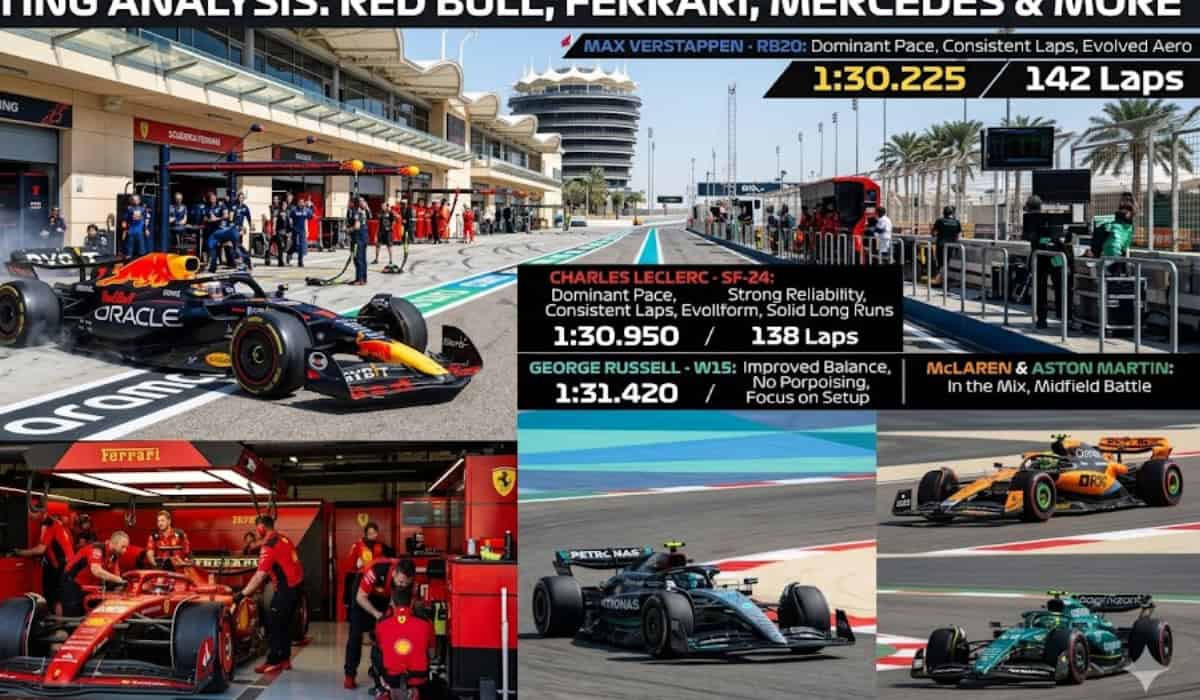
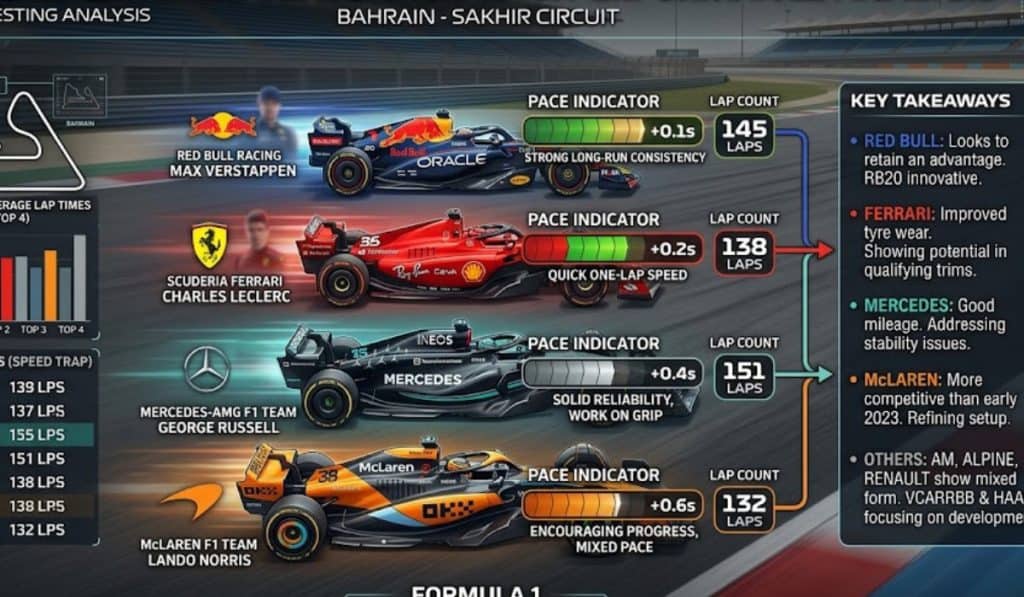
The battle between Red Bull, Ferrari, Mercedes, and McLaren was one of the biggest talking points during testing.
Red Bull vs Ferrari
Red Bull appeared slightly stronger in race pace and tire management, while Ferrari looked competitive in qualifying simulations and straight-line speed.
Mercedes vs McLaren
Mercedes focused heavily on consistency and stability, while McLaren appeared slightly more aggressive and faster during short runs.
Midfield Competition
Aston Martin, Williams, and Alpine all showed different strengths. Aston Martin appeared the most balanced overall, while Williams impressed with speed and Alpine focused on experimentation.
F1 Shakedown vs Testing
Many fans often confuse an F1 shakedown with official testing, but they serve different purposes.
What Is an F1 Shakedown?
A shakedown is a limited private session used primarily to check whether a newly built car functions correctly. Teams usually complete only short distances under strict mileage restrictions.
What Is F1 Testing?
Official testing sessions are longer and allow teams to experiment with setups, fuel loads, aerodynamic configurations, and race simulations.
Key Differences
A shakedown mainly focuses on functionality and system checks, while testing focuses on performance analysis and development.
Can F1 Testing Predict the Season?
Testing often provides useful clues, but it never tells the complete story.
Hidden Fuel Loads
Teams rarely reveal their true pace because fuel loads can dramatically affect lap times. A heavier car may appear slower even if it has strong potential.
Different Testing Programs
Each team follows unique objectives during testing. Some prioritize reliability while others focus on qualifying simulations or tire experiments.
Development Throughout the Season
Formula 1 cars evolve constantly. Teams introduce upgrades during nearly every race weekend, meaning testing performance may change significantly later in the year.
Biggest Winners From F1 Testing
Several teams left testing with positive momentum.
Red Bull
Red Bull once again looked like the benchmark team thanks to strong reliability and race pace.
McLaren
McLaren impressed many analysts with balanced handling and competitive lap times.
Ferrari
Ferrari showed meaningful improvements in tire management and overall consistency.
Teams Facing Questions After Testing
Not every team enjoyed a perfect pre-season program.
Alpine
Reliability and consistency concerns created uncertainty around Alpine’s true competitiveness.
Mercedes
Although improved, Mercedes still appeared to have minor balance issues that could limit performance on specific tracks.
Conclusion
F1 testing remains one of the most fascinating parts of the Formula 1 calendar because it provides the first detailed glimpse into the competitive order of the upcoming season. Red Bull continued to show championship-level pace and reliability, while Ferrari and McLaren emerged as strong challengers with impressive technical improvements. Mercedes appeared more stable and confident than previous seasons, while Aston Martin, Williams, and Alpine each displayed unique strengths and weaknesses.
However, testing results should always be viewed carefully because teams hide strategies, fuel loads, and development plans. The true competitive picture only becomes clear once the first races begin. Even so, Formula 1 testing offers fans an exciting preview of what could become another intense and unpredictable championship battle.
FAQ
What is F1 pre-season testing?
F1 pre-season testing is a series of sessions where teams evaluate new cars, collect data, and prepare for the upcoming Formula 1 season.
Which team looked fastest in F1 testing?
Red Bull appeared strongest overall during testing due to impressive race pace and reliability.
Why are F1 testing lap times misleading?
Teams use different fuel loads, tire compounds, and testing programs, making direct lap-time comparisons unreliable.
What is the difference between F1 shakedown and testing?
A shakedown is a limited systems check, while official testing focuses on performance analysis and development work.
Can testing results predict the Formula 1 champion?
Testing provides clues, but the championship battle often changes as teams introduce upgrades during the season.