
Jules Bianchi and the Formula 1 Safety Revolution
The history of Formula 1 has always been shaped by innovation, speed, and an ongoing commitment to safety. While motorsport remains inherently dangerous, every major incident has led to improvements designed to protect drivers and officials. One of the most significant turning points in modern Formula 1 safety came after the accident involving Jules Bianchi during the 2014 Japanese Grand Prix.
The tragic events surrounding Jules Bianchi not only shocked the motorsport world but also accelerated several important safety developments. The introduction of the Virtual Safety Car, renewed discussions about cockpit protection, and broader Formula 1 safety reforms all emerged as part of the sport’s response. Today, many of the systems that protect drivers can be linked directly or indirectly to lessons learned from that accident.
This article explores the relationship between Jules Bianchi, Formula 1 safety changes, the Halo system, and the lasting impact his legacy has had on the sport.
Understanding the Jules Bianchi Accident
The Events at Suzuka
During the rain-affected 2014 Japanese Grand Prix at Suzuka Circuit, Jules Bianchi lost control of his Marussia while approaching a section where marshals were recovering another car. His vehicle left the track and collided with a recovery vehicle positioned near the barrier, an incident that prompted major safety improvements across Formula One, including measures later supported by teams such as red bull racing.
The accident resulted in severe head injuries. After months of medical treatment, Bianchi passed away in July 2015, becoming the first Formula 1 driver to die from injuries sustained during a Grand Prix weekend since Ayrton Senna in 1994.
The incident immediately prompted questions about Formula 1 safety procedures, race control decisions, and the protection available to drivers in extreme circumstances.
Why the Accident Was Significant
The crash highlighted several areas where Formula 1 could improve safety, particularly regarding:
Track Recovery Operations
The presence of heavy recovery equipment near active racing areas became a major point of discussion, leading to renewed attention on Formula 1 aerodynamics and overall safety regulations designed to improve car control and reduce risks in challenging conditions.
Speed Management Under Hazardous Conditions
Officials examined whether drivers should be required to reduce speed more effectively during dangerous situations.
Cockpit Protection
The severity of Bianchi’s head injuries renewed interest in finding ways to protect drivers from large impacts and external objects.
Jules Bianchi Safety Changes That Followed
The aftermath of the accident triggered one of the most comprehensive reviews of Formula 1 safety procedures in modern history.
Enhanced Risk Assessment
Formula 1 began conducting more detailed evaluations of track recovery operations and incident management.
Race directors, safety delegates, and teams worked together to establish stricter protocols for situations involving stranded cars and recovery vehicles.
Improved Weather Monitoring
Extreme weather conditions played a role in the events at Suzuka. As a result, Formula 1 increased its use of weather forecasting technologies and race monitoring systems, changes that have benefited all teams, including many of the most successful F1 teams, by improving safety and decision-making during challenging race conditions.
Officials now have access to more advanced tools that help evaluate changing track conditions and potential safety risks.
Greater Driver Protection Focus
The accident accelerated discussions around cockpit safety and driver survivability.
Protecting the driver’s head became one of the sport’s top priorities during subsequent years.
The Introduction of the Virtual Safety Car
One of the most important Formula 1 safety reforms resulting from the investigation was the introduction of the Virtual Safety Car.
What Is the Virtual Safety Car?
The Virtual Safety Car, commonly known as the VSC, is a system designed to neutralize a race without deploying the physical Safety Car, helping maintain safety while preserving exciting updates and thrilling moments throughout the race.
Instead of bunching the field together, drivers are required to maintain a specific pace determined by Formula 1’s timing systems.
This ensures that all competitors reduce speed significantly while preserving race order.
Why Was the Virtual Safety Car Introduced?
Investigators concluded that additional methods were needed to control driver speed during hazardous situations.
The VSC allows race control to create a safer environment whenever marshals, medical staff, or recovery vehicles are operating near the circuit.
Benefits of the Virtual Safety Car
Increased Safety
Drivers immediately reduce speed throughout the entire track.
Faster Incident Response
Marshals can access dangerous areas more safely.
Better Race Management
Race interruptions become more efficient compared to deploying a full Safety Car.
Today, the Virtual Safety Car is a standard part of Formula 1 race operations and is widely regarded as one of the most effective safety innovations introduced in recent decades, highlighting the sport’s continued focus on technological innovations that improve both safety and competition.
Jules Bianchi and the Virtual Safety Car Connection
The link between Jules Bianchi and the Virtual Safety Car is undeniable.
The system was developed directly in response to recommendations made following the investigation into the Suzuka accident.
Although no single safety measure can eliminate all risks, the VSC has significantly reduced the likelihood of similar circumstances occurring again.
Since its introduction, teams, drivers, and officials have praised the system for improving safety while maintaining the competitive integrity of Formula 1.
The Halo System and Driver Protection
Another major development associated with the ongoing safety evolution of Formula 1 is the Halo system.
What Is the Halo?
The Halo is a titanium cockpit protection structure positioned around the driver’s head.
Introduced in Formula 1 in 2018, it was designed to protect drivers from:
- Flying debris
- Tire impacts
- Car-to-car contact
- Trackside objects
- Severe collision forces
The Halo can withstand enormous loads and has become one of the most recognizable safety features in modern motorsport.
Did Jules Bianchi Lead to the Halo?
Research into cockpit protection began before the Suzuka accident, but Bianchi’s injuries accelerated the urgency of finding a practical solution, leading to broader discussions alongside topics such as F1 overtaking rules and other regulations aimed at improving driver safety and fair racing.
The incident highlighted the vulnerability of the driver’s head during severe impacts.
As a result, Formula 1 intensified its efforts to implement a robust cockpit protection device.
The Halo ultimately emerged as the preferred solution after extensive testing and evaluation.
Initial Resistance to the Halo
When the Halo was first introduced, some fans and drivers criticized its appearance.
Common concerns included:
Visual Impact
Some believed it changed the traditional look of Formula 1 cars.
Driver Visibility
Questions were raised about whether visibility would be affected.
Aesthetic Concerns
Purists argued that open-cockpit racing should remain unchanged.
However, these concerns faded as evidence of the Halo’s effectiveness became clear.
Real-World Examples of Halo Success
Since its introduction, the Halo has protected numerous drivers in potentially catastrophic accidents.
Several major crashes demonstrated its value by preventing direct impacts to the driver’s head.
These incidents reinforced Formula 1’s decision to prioritize safety over aesthetics.
Today, the Halo is widely considered one of the most important safety innovations in the sport’s history.
Formula 1 Safety After Jules Bianchi
The years following the accident have seen continuous progress across multiple areas of the sport.
Advanced Crash Structures
Modern Formula 1 cars feature stronger survival cells and impact-resistant materials.
Improved Medical Procedures
Medical teams now have enhanced equipment, training, and emergency response protocols.
Better Communication Systems
Race control can communicate hazards more effectively with teams and drivers.
Stronger Testing Standards
Every new Formula 1 car must pass increasingly rigorous crash tests before competing.
Data-Driven Safety Analysis
Engineers use advanced telemetry and accident data to identify risks and improve car design.
Broader Formula 1 Safety Reforms
The impact of the safety changes extends beyond Formula 1 itself.
Influence on Junior Categories
Formula 2, Formula 3, Formula Regional, and karting championships have adopted many of the same safety principles.
Adoption Across Motorsport
Numerous racing series worldwide have introduced cockpit protection systems inspired by Formula 1 developments.
Global Safety Leadership
Formula 1 continues to serve as a testing ground for technologies that may later appear in other forms of motorsport.
The Lasting Legacy of Jules Bianchi
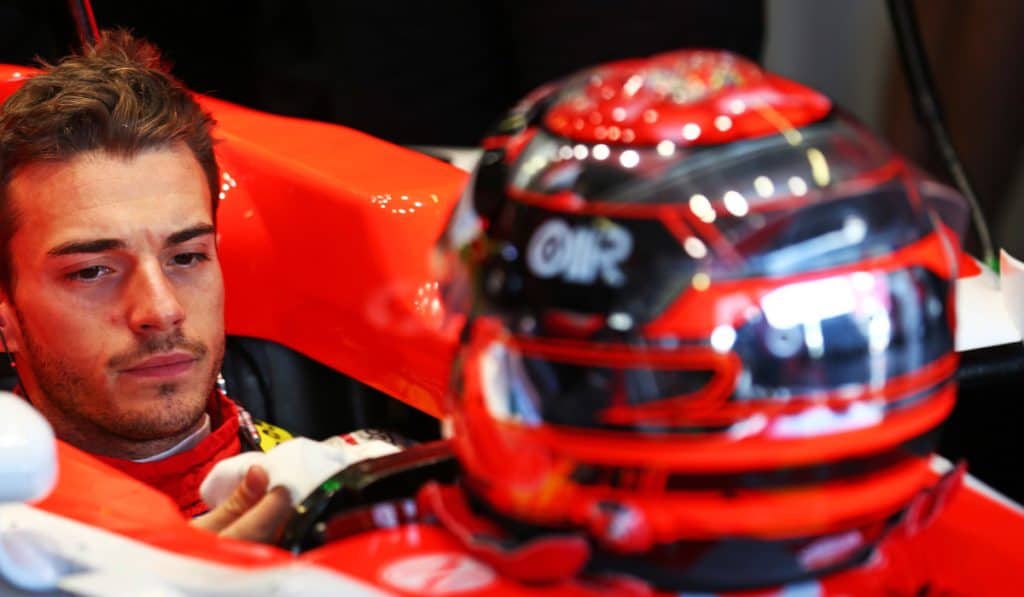
Jules Bianchi was widely regarded as one of the most promising young talents in Formula 1.
His performances with Marussia demonstrated exceptional ability, and many believed he had the potential to become a future star of the sport.
Although his career was tragically cut short, his legacy continues through the safety improvements that have helped protect future generations of drivers.
Every time the Virtual Safety Car is deployed or a driver benefits from modern cockpit protection, the influence of the lessons learned from Suzuka remains visible.
The changes implemented after the accident have made Formula 1 safer than ever before while preserving the excitement and competition that define the championship.
Conclusion
The accident involving Jules Bianchi marked one of the most important moments in modern Formula 1 history. The incident led to significant safety reforms, including the introduction of the Virtual Safety Car, enhanced recovery procedures, improved risk management, and increased focus on driver protection, leaving a lasting motorsport legacy that continues to shape the sport today.
The eventual adoption of the Halo system further demonstrated Formula 1’s commitment to safeguarding competitors while continuing to push technological boundaries.
Today, Formula 1 safety standards are stronger than ever, and many of those advancements can be traced back to the lessons learned following the Suzuka accident. While motorsport will never be completely free of risk, the legacy of Jules Bianchi continues to shape a safer future for drivers across the racing world.

FAQ
What safety changes came after Jules Bianchi’s accident?
Major changes included the introduction of the Virtual Safety Car, stricter recovery vehicle procedures, improved weather monitoring, and increased focus on cockpit protection.
What is the Virtual Safety Car in Formula 1?
The Virtual Safety Car is a race control system that requires all drivers to slow down to a controlled pace during hazardous situations without deploying the physical Safety Car.
Did Jules Bianchi’s accident lead to the Halo?
Cockpit protection research was already underway, but the accident accelerated efforts to implement a solution, contributing to the eventual adoption of the Halo.
How does the Halo improve Formula 1 safety?
The Halo protects drivers from impacts involving debris, tires, other cars, and trackside objects by creating a protective structure around the cockpit.
Why is Jules Bianchi important to Formula 1 safety?
His accident prompted significant reviews of safety procedures and accelerated reforms that have helped improve driver protection throughout Formula 1 and motorsport as a whole.