F1 aerodynamics explained learn how downforce creates faster lap times for drivers
Formula 1 aerodynamics sits at the heart of modern Grand Prix racing and is often the decisive factor between winning and losing championships. While engines provide power, it is aerodynamic efficiency that determines how effectively that power is converted into lap time. Teams invest hundreds of millions into understanding airflow, pressure zones, and vehicle behavior at extreme speeds. From complex front wings to highly sculpted floors, aerodynamics shapes cornering speed, tire management, and overtaking ability. This deep dive explains Formula 1 aerodynamics in a clear, technical yet accessible way, aimed at curious fans, engineers, and motorsport enthusiasts alike.
Why Aerodynamics Is Critical in F1
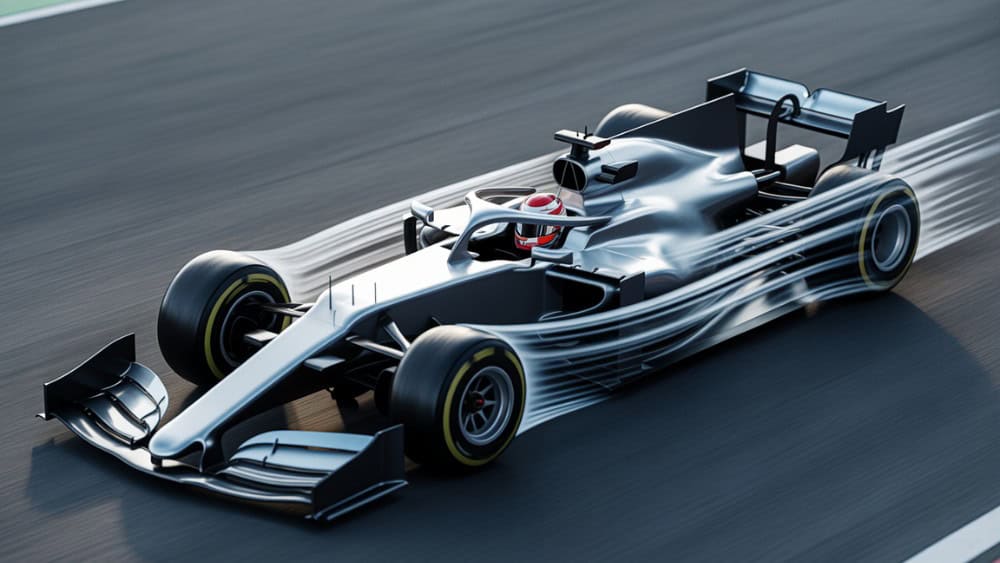
Aerodynamics is critical in Formula 1 because cars travel at speeds where managing airflow and air resistance dominates performance. At over 300 km/h, air becomes a tangible force that can either press a car onto the track or slow it down significantly. Downforce allows cars to corner much faster than mechanical grip alone would permit, while drag limits straight-line speed. The careful balance between these forces determines lap times. Aerodynamics also influences tire wear, stability under braking, and driver confidence, making it central to race strategy and car design. Understanding Formula 1 Speeds highlights just how important aerodynamics is in achieving peak performance.
- Determines cornering speed and stability
- Influences tire degradation and temperature
- Impacts braking distances and traction
- Shapes overtaking and defensive capability
- Directly linked to overall lap time
Downforce vs Drag Explained
Downforce and drag are the two opposing aerodynamic forces that every F1 team must manage. Downforce presses the car into the track, increasing grip and allowing higher cornering speeds, while drag resists forward motion and limits top speed. Increasing downforce usually comes with an increase in drag, creating a constant engineering trade-off. The most successful cars generate efficient downforce, achieving maximum grip with minimal drag penalty. How teams tune this balance each weekend is heavily influenced by track characteristics, highlighting the complexity of formula 1 racing dynamics.
- Downforce increases grip and corner speed
- Drag limits acceleration and top speed
- Aerodynamic efficiency is the key metric
- Setup changes vary by circuit type
- Weather conditions also influence balance
Front Wing, Rear Wing & Floor
The front wing, rear wing, and floor are the primary aerodynamic devices on an F1 car. The front wing manages airflow around the front tires and sets up clean air for the rest of the car. The rear wing generates significant downforce but also produces drag, making it adjustable for different circuits. The floor, especially in modern F1, is the largest contributor to downforce, using ground effect principles to create low pressure beneath the car. Together, these elements form a highly integrated aerodynamic system.
- Front wing controls airflow direction
- Rear wing provides adjustable downforce
- Floor generates majority of total downforce
- Components must work as one system
- Small changes can have large effects
Ground Effect Era Explained
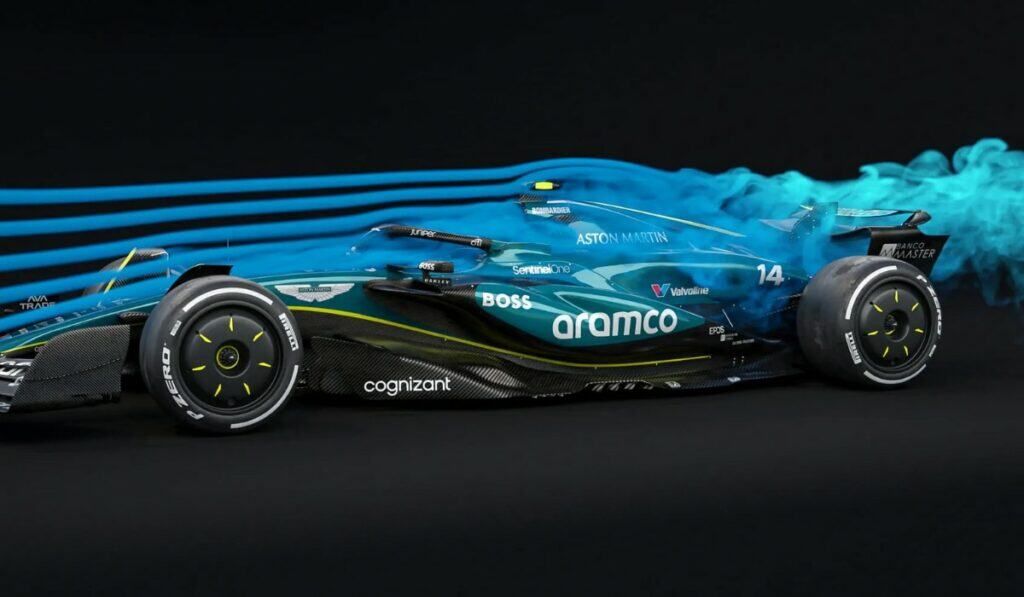
The ground effect era has redefined Formula 1 aerodynamics by shifting focus from wings to the car’s floor. Ground effect accelerates airflow under the car, creating low pressure that effectively “sucks” the car toward the track. This generates downforce more efficiently and with less turbulent wake, allowing cars to follow each other more closely. Introduced to enhance racing quality, modern ground effect cars rely on precise ride height control and floor design to maintain performance—insights often covered in Formula One Team News.
- Uses low pressure under the car
- More efficient than wing-generated downforce
- Reduces dirty air for closer racing
- Highly sensitive to ride height
- Central to current F1 regulations
DRS System
The Drag Reduction System, or DRS, is designed to temporarily reduce aerodynamic drag to aid overtaking. By opening a flap in the rear wing, drag decreases and top speed increases on designated straights. DRS can only be used under specific rules, such as being within one second of another car. While sometimes controversial, it helps overcome aerodynamic turbulence that makes passing difficult, adding a strategic element to racing and contributing to exciting updates and thrilling moments on the track.
- Reduces drag on straights
- Increases overtaking opportunities
- Controlled by FIA regulations
- Only available in specific zones
- Adds tactical race dynamics
Wind Tunnel & CFD Testing
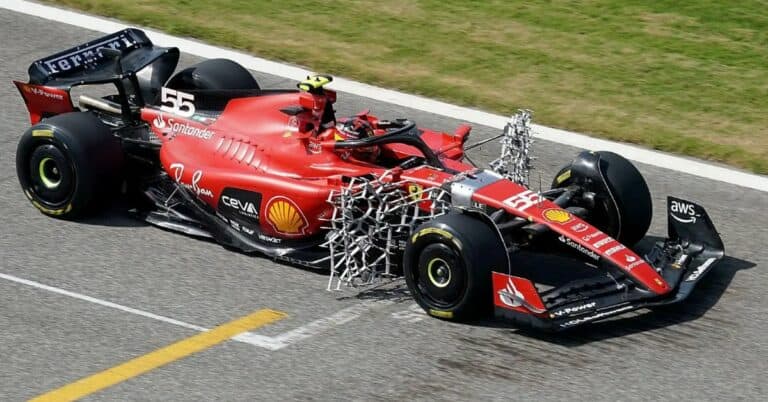
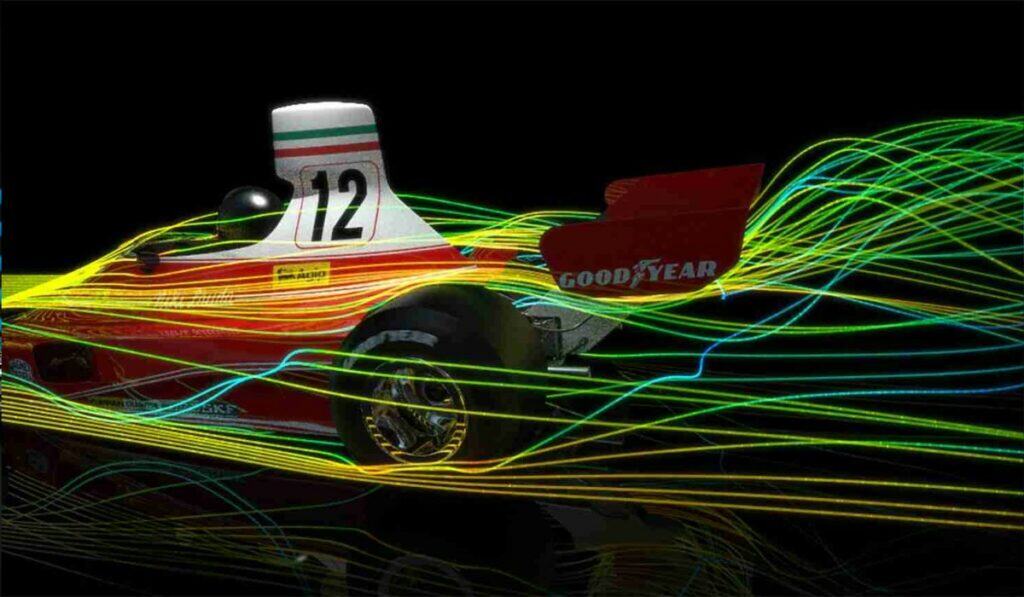
Aerodynamic development relies heavily on wind tunnel testing and Computational Fluid Dynamics (CFD). Wind tunnels provide real-world airflow data using scale models, while CFD uses advanced simulations to analyze airflow digitally. Due to cost and fairness concerns, Formula 1 restricts the amount of testing allowed, forcing teams to work efficiently. Successful teams combine both methods to validate concepts and optimize performance within tight regulations.
- Wind tunnels test physical models
- CFD simulates airflow digitally
- Strict limits control development time
- Data correlation is crucial
- Efficiency often beats raw spending
Regulation Changes Impact
Formula 1 aerodynamic regulations change frequently to control costs, improve safety, and enhance racing. Each shift forces teams to rethink design philosophies, sometimes reshuffling the competitive order. Changes can limit wing sizes, floor geometry, or airflow management techniques. Teams that adapt quickly gain a major advantage, while others struggle to recover. These regulation changes often directly impact overtaking in Formula 1, influencing how easily cars can pass each other on track.
- Regulations shape design freedom
- Major changes reset competitive balance
- Innovation often occurs in gray areas
- FIA aims to improve racing quality
- Adaptability is a competitive advantage
Famous Aerodynamic Innovations
Throughout F1 history, groundbreaking aerodynamic innovations have transformed the sport. Examples include ground effect tunnels in the late 1970s, blown diffusers in the 2010s, and double diffusers that exploited regulatory loopholes. These developments often provide massive performance gains until regulations catch up, highlighting how creativity and engineering brilliance drive technological innovations in Formula 1.
- Ground effect tunnels revolutionized grip
- Double diffusers created dominant cars
- Blown diffusers improved rear stability
- Innovations often push rule limits
- History rewards bold engineering
Future of F1 Aero
The future of Formula 1 aerodynamics aims to balance performance, sustainability, and racing quality. Upcoming regulations focus on reducing dirty air, lowering development costs, and improving overtaking. Active aerodynamics and simplified surfaces may play a larger role, while sustainability concerns increasingly influence design priorities. Aerodynamics will remain central, but with tighter controls and greater emphasis on efficiency over complexity—factors that top drivers like Lewis Hamilton expertly navigate on track.
- Cleaner airflow for better racing
- Cost controls limit development
- Sustainability influences design choices
- Possible expansion of active aero
- Efficiency remains the core goal
Final Thought
Formula 1 aerodynamics is a relentless pursuit of airflow mastery, where fractions of a second define greatness. Championships are not just won by drivers, but by the invisible forces shaped by engineers pushing the limits of physics and regulations. Understanding these dynamics helps explain the success of the top 5 F1 drivers, whose skill is amplified by cutting-edge aerodynamic design.
FAQs
What is Formula 1 aerodynamics in simple terms?
Formula 1 aerodynamics refers to how air flows around the car to generate downforce and reduce drag, directly affecting speed, grip, stability, and overall lap time.
Why is downforce more important than engine power?
Downforce allows F1 cars to corner much faster, and since lap time is largely decided in corners, aerodynamic grip often matters more than raw engine power.
How does ground effect work in F1?
Ground effect creates low pressure under the car by accelerating airflow, sucking the car toward the track and generating efficient downforce with reduced aerodynamic turbulence.
What role does the rear wing play?
The rear wing produces significant downforce for stability and traction but also adds drag, making it a key component for balancing straight-line speed and corner performance.
Will aerodynamics always dominate Formula 1?
Yes, as long as cars travel at extreme speeds, aerodynamics will remain a dominant factor, even as regulations evolve to improve racing and control costs.