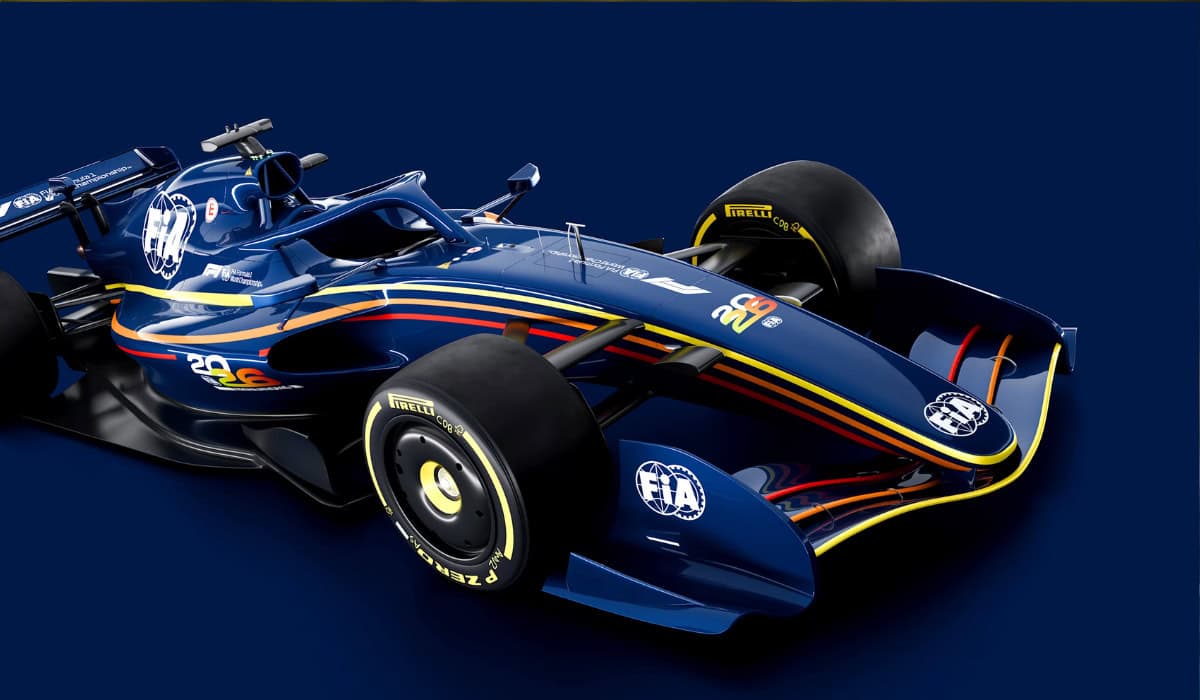
The guide for F1 aerodynamics learn all about downforce and wings of now self now
Formula 1 is not just about engines, tires, and drivers—it’s also a battle of the airflow. Aerodynamics in F1 is a science, art, and a constantly evolving strategy that separates champions from the rest. Every surface, wing, and vent is meticulously designed to manipulate air, generate downforce, minimize drag, and optimize tire performance. From historic ground effect cars to today’s hybrid power units, aerodynamics has consistently defined lap times, overtaking opportunities, and championship battles. Teams invest hundreds of millions in wind tunnels, CFD simulations, and trackside adjustments to maximize every fraction of a second. Understanding F1 aerodynamics means exploring downforce, drag, wings, floors, and the intricate dance between speed and stability that governs modern racing. This guide dives deep into how airflow translates to performance on the pinnacle of motorsport.
Why Aerodynamics is Critical in F1
Aerodynamics determines how effectively an F1 car slices through the air and sticks to the track.
• F1 cars are designed to maximize downforce without excessive drag penalties.
• High-speed stability is achieved through careful airflow management around the chassis.
• Even minor aerodynamic inefficiencies can cost tenths of a second per lap.
The importance of aerodynamics extends beyond top speed; cornering, braking, and tire wear are all influenced by how air interacts with the car. To exploit these effects, teams rely on cutting-edge technological innovations such as computational fluid dynamics, wind-tunnel testing, and real-time data analysis to precisely control airflow. Countless hours are spent refining these systems to uncover marginal gains that can reshape race strategy and ultimately determine championship outcomes.
Downforce vs Drag Explained
Understanding the trade-off between downforce and drag is fundamental to F1 car design.
– Downforce pushes the car onto the track, improving cornering grip.
– Drag resists forward motion, limiting top speed on straights.
– Teams balance wing angles to optimize both for each circuit’s characteristics.
– Higher downforce increases tire wear but improves stability.
Maximizing performance requires finding the sweet spot where aerodynamic grip outweighs the speed lost to drag. Tracks with long straights favor lower drag, while twisty circuits demand higher downforce for cornering efficiency. At the F1 Las Vegas Grand Prix, with its combination of fast straights and tight corners, teams face the unique challenge of balancing top speed with cornering stability, making aerodynamics a decisive factor in strategy and tire management.
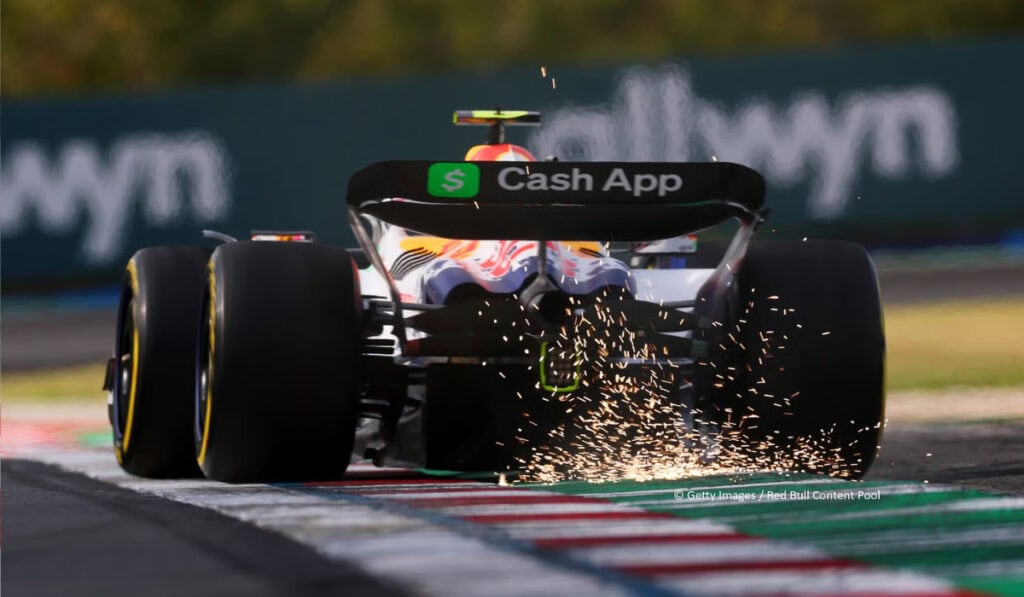
Front Wing, Rear Wing & Floor
The front and rear wings, along with the car floor, are critical to generating balanced downforce.
- Front wing directs airflow to the rest of the car and creates initial downforce.
- Rear wing stabilizes the car during high-speed corners.
- The floor and diffuser accelerate air underneath, producing ground effect.
- Winglets and bargeboards refine airflow around suspension and sidepods.
Each aerodynamic element interacts dynamically with the others, meaning even small design changes can drastically affect handling. Engineers at Red Bull Racing constantly refine wing profiles, endplates, and floor contours to achieve the optimal balance between grip, stability, and drag reduction, turning subtle adjustments into measurable performance gains on track.
Ground Effect Era Explained
Ground effect revolutionized F1 aerodynamics by using the car’s floor to generate massive downforce.
• Air tunnels and venturi-shaped floors create suction, pulling the car to the track.
• Reduced reliance on wings allows lower drag for higher speeds.
• Pioneered in the late 1970s, briefly banned, then reintroduced in modern regulations.
Ground effect improves cornering grip dramatically, but it demands precise chassis and suspension tuning to prevent sudden losses of downforce. Modern F1 cars employ carefully designed ground effect tunnels, simplifying the concept to maintain safety while extracting maximum aerodynamic efficiency. These dynamics play a critical role in Formula 1, where even minor adjustments can significantly influence lap times, tire wear, and overall race strategy.
DRS System
The Drag Reduction System (DRS) allows strategic control of rear wing drag.
– Activated in designated zones to reduce rear downforce.
– Facilitates overtaking by increasing straight-line speed.
– Drivers must be within one second of a competitor to use DRS.
– A tactical tool influencing race strategy and lap time.
While DRS improves overtaking, teams design rear wings to maintain stability when DRS is inactive, carefully balancing maximum cornering grip with straight-line speed. In Formula 1 racing dynamics, this trade-off is crucial: a wing optimized for high-speed straights must still provide predictable handling through corners, influencing tire wear, lap times, and overall race strategy.
Wind Tunnel & CFD Testing
Modern F1 teams rely heavily on wind tunnels and computational fluid dynamics (CFD) for aerodynamic development.
• Wind tunnels replicate track airflow conditions for model testing.
• CFD simulates airflow over digital car models to test multiple configurations.
• Teams optimize wing angles, floor shapes, and airflow channels before track deployment.
• Both tools reduce track time spent testing, saving costs and resources.
• Data-driven aero insights ensure faster, safer, and more consistent lap times.
These technologies enable iterative improvements, allowing teams to predict airflow behavior and optimize downforce while minimizing drag across diverse circuit layouts. The result is not only faster, more balanced cars but also exciting updates and thrilling moments on track, as fans witness the impact of precision engineering in real time.
Regulation Changes Impact
F1 aerodynamics evolves with strict regulations to improve safety and competitiveness.
– Wing dimensions, car width, and diffuser sizes are tightly controlled.
– Ground effect floors were reintroduced with safety limits.
– Aero tokens and development freezes affect how teams evolve designs mid-season.
– Smaller innovations, like brake ducts or vortex generators, maximize legal gains.
Regulations force engineers to innovate within strict limits, often driving creative solutions that define competitive advantages while ensuring driver safety and maintaining parity among teams. These innovations directly affect overtaking in Formula 1, as clever aerodynamic designs can enhance straight-line speed, improve cornering grip, and create more opportunities for on-track battles.
Famous Aerodynamic Innovations
Several innovations have left lasting marks on F1 aerodynamics history.
• Double diffusers (2009) increased downforce without extra drag.
• F-ducts (2010–2011) allowed airflow manipulation for higher straight-line speed.
• Blown diffusers optimized exhaust gases for aerodynamic gain.
• Coanda exhausts shaped airflow to improve rear wing efficiency.
These breakthroughs often sparked regulation changes and reshaped competitive dynamics, showing the high stakes of aerodynamic innovation in championship battles.
Future of F1 Aero
F1 aerodynamics continues evolving with sustainability and competitive racing in mind.
– Simplified ground effect cars improve overtaking while retaining downforce.
– Hybrid powertrain cooling solutions influence bodywork design.
– Additive manufacturing and new materials enable complex aero shapes.
– AI-driven CFD predicts airflow optimizations faster than ever.
Future regulations focus on cleaner, more efficient airflow while maintaining exciting racing and reducing environmental impact, ensuring aerodynamics remains a cornerstone of performance strategy. Drivers like Lewis Hamilton have consistently demonstrated how mastering these evolving aerodynamic principles can turn regulatory challenges into on-track advantages, blending engineering precision with driving skill.
Conclusion
Formula 1 aerodynamics is the invisible force behind every corner, straight, and championship-winning lap. Mastering downforce, drag management, and airflow is the ultimate blend of science, creativity, and strategy. From historical ground effect breakthroughs to modern hybrid-era innovations, teams leverage wings, floors, and computational tools to extract milliseconds from each lap. As regulations evolve, aerodynamics continues shaping car design, racing tactics, and even driver skill. Understanding these principles offers insight into why F1 is not just a race of engines and drivers but a high-speed battle of physics and innovation. Every championship in F1 history has been influenced by the mastery of airflow, and even the top 5 F1 drivers owe part of their success to how effectively their cars harness the air around them.
FAQ
What is Formula 1 aerodynamics?
Formula 1 aerodynamics is the study and design of car surfaces and airflow to maximize downforce, reduce drag, and optimize cornering, straight-line speed, and tire performance. As Vasseur Frédéric and other team leaders emphasize, understanding and applying these principles is key to translating engineering precision into race-winning results on track.
How does downforce help F1 cars?
Downforce pushes the car onto the track, increasing tire grip, improving cornering speed, stability, and braking efficiency while balancing drag for optimal lap times.
What is ground effect in F1?
Ground effect uses shaped floors and venturi tunnels to accelerate air beneath the car, creating suction that increases downforce without heavy reliance on wings.
How do F1 teams test aerodynamics?
Teams use wind tunnels and CFD simulations to model airflow, optimize wings, floors, and bodywork, reducing track testing and allowing precise aerodynamic refinements.
How will future F1 aerodynamics evolve?
Future F1 aero focuses on simplified ground effect, hybrid cooling solutions, additive manufacturing, and AI-driven CFD for efficient, safe, and competitive racing with improved overtaking.