
Formula 1 Introduction – Everything You Need to Know as a Beginner
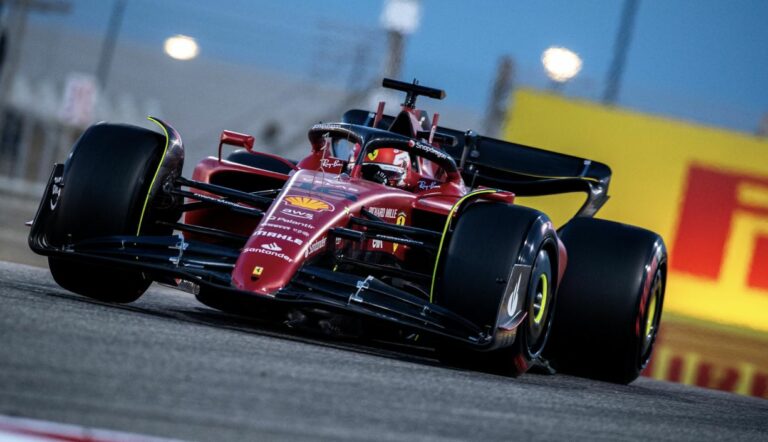
Formula 1 is the highest class of international motorsport, featuring the fastest, most technologically advanced racing cars and the world’s best drivers competing on iconic circuits across the globe. It is widely known as the pinnacle of racing because it combines extreme speed, precision engineering, teamwork, and strategy in every race weekend. Unlike other sports, Formula 1 is not only about driving skill but also about technology, data analysis, and split-second decision-making that can change race outcomes instantly. This beginner-friendly guide will help you understand what Formula 1 is, how it works, its history, teams, cars, and why it has become one of the most popular sports in the world, truly building its motorsport legacy over decades.
Understanding Formula 1 – what the sport actually is
Formula 1 is the highest level of international single-seater motorsport, where the fastest cars, most advanced technology, and best drivers compete against each other. It is widely regarded as the pinnacle of racing because it combines extreme speed, precision engineering, and strategic decision-making in every race.
- Formula 1 is a global racing championship where teams compete using highly advanced open-wheel cars designed for maximum speed and performance.
- The sport focuses not only on driving skill but also on engineering, aerodynamics, and race strategy to gain competitive advantages.
- It is considered the highest level of motorsport because of its strict technical regulations and elite level of competition.
Formula 1 is not just about speed; it is about teamwork, innovation, and split-second decisions. Every race is a mix of human skill and cutting-edge technology working together under extreme pressure, where Formula 1 aerodynamics plays a crucial role.
The history of Formula 1 and how it evolved
Formula 1 began in 1950 as a structured world championship for open-wheel racing cars. Over the decades, it evolved from a dangerous, raw motorsport into a highly regulated and technologically advanced global sport.
- The first official Formula 1 World Championship race took place in 1950 at Silverstone in the United Kingdom.
- Over time, major safety improvements were introduced to protect drivers and improve racing standards.
- The sport expanded globally, becoming one of the most watched and commercially powerful sports in the world.
- Modern F1 now includes hybrid engines, advanced aerodynamics, and global broadcasting reach.
Today, Formula 1 is a perfect blend of tradition and innovation, where history meets modern technology on every circuit, along with fan engagement features like the F1 Driver of the Day, which lets viewers celebrate standout performances after each race.
F1 teams and drivers – how the grid is structured
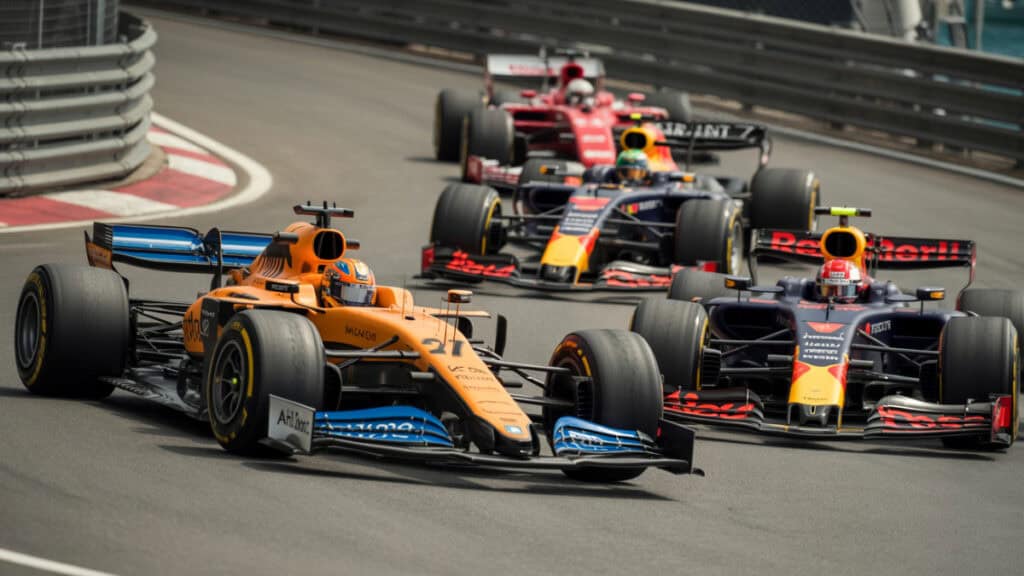
Formula 1 consists of multiple teams, each fielding two drivers who compete in every race. These teams design and build their own cars within strict regulations and compete for both individual and team success.
- Each Formula 1 team enters two drivers who race against competitors from other teams on the grid.
- Teams are responsible for designing, building, and improving their cars throughout the racing season.
- Drivers represent both themselves and their teams in the fight for championship points.
- Competition happens not only between drivers but also between constructors (teams).
This structure creates dual competition, making Formula 1 unique as both individual performance and team engineering matter equally, especially during intense moments like overtaking in Formula 1, where split-second decisions, tire strategy, and car performance all come into play.
Formula 1 cars and the technology behind them
Formula 1 cars are some of the most advanced machines in the world, built with cutting-edge aerodynamics, hybrid engines, and lightweight materials. Every part of the car is designed for maximum speed, safety, and performance.
- F1 cars use hybrid power units that combine traditional combustion engines with electric energy systems for efficiency and speed.
- Aerodynamic design plays a crucial role in generating downforce, allowing cars to corner at extremely high speeds.
- Materials like carbon fiber are used to keep cars lightweight yet extremely strong and safe.
- Teams constantly upgrade components to improve performance during the season.
These machines are the result of decades of engineering evolution and represent the peak of automotive technology, developed and refined over time by some of the most successful F1 teams in the sport’s history.
How a Formula 1 race weekend works
A Formula 1 race weekend follows a structured format that includes practice sessions, qualifying, and the main race. Each stage plays an important role in determining race performance and strategy.
- Practice sessions allow teams to test car setups and understand track conditions before competitive racing begins.
- Qualifying determines the starting positions on the grid based on fastest lap times.
- The main race takes place on Sunday, where drivers compete for championship points.
- Strategy, tire management, and weather conditions heavily influence race outcomes.
Every session matters, making race weekends highly strategic and unpredictable, filled with exciting updates and thrilling moments that can instantly change the outcome of a Grand Prix.
How Formula 1 championships are decided
Formula 1 has two main championships: the Drivers’ Championship and the Constructors’ Championship. Points are awarded based on finishing positions in each race throughout the season.
- Drivers earn points based on their finishing position in each Grand Prix.
- The driver with the highest total points at the end of the season becomes World Champion.
- Teams accumulate points from both drivers to compete for the Constructors’ Championship.
- Consistency across the season is often more important than winning a single race.
This points system ensures that both performance and reliability are essential for success.
Legendary drivers and iconic teams in F1 history
Formula 1 has a rich history filled with legendary drivers and dominant teams who shaped the sport into what it is today. Their achievements continue to inspire new generations of fans.
- Legendary drivers like Michael Schumacher and Lewis Hamilton have set records in wins and championships.
- Historic teams such as Ferrari and McLaren have played major roles in shaping F1 history.
- These figures are remembered for their skill, dominance, and contribution to motorsport innovation.
- Their legacy continues to influence modern racing culture and competition.
Formula 1 history is built on greatness, making the sport deeply respected worldwide, with its legacy closely tied to continuous technological innovations that shape the future of racing.
Why Formula 1 is one of the most popular sports in the world
Formula 1 has a massive global audience due to its combination of speed, drama, technology, and entertainment. It attracts fans from every continent and continues to grow rapidly.
- The sport is broadcast in over 180 countries, reaching millions of viewers worldwide.
- High-speed racing and unpredictable outcomes make it exciting and engaging to watch.
- F1 has strong cultural influence through media, documentaries, and digital content.
- Global circuits bring the sport to iconic cities and locations around the world.
Its mix of sport and entertainment makes Formula 1 unique among global sports.
How to start watching Formula 1 as a beginner
Starting with Formula 1 can feel complex, but understanding the basics makes it easy to enjoy. Beginners can focus on key moments rather than technical details.
- Watching race highlights is a great way to understand key events and overtakes.
- Pay attention to qualifying sessions to understand starting positions and race strategy.
- Learn basic terminology like pit stop, DRS, and pole position for better understanding.
- Following a favorite team or driver makes the experience more engaging.
Once the basics are clear, Formula 1 becomes an exciting and addictive sport to follow.
Conclusion
Formula 1 is more than just a sport; it is a global showcase of speed, innovation, and human performance pushed to its absolute limit. From its rich history to modern hybrid technology, F1 continues to evolve while keeping fans deeply engaged around the world. Understanding the basics helps beginners appreciate the strategy, teamwork, and engineering behind every race. Whether you are watching for excitement or curiosity, Formula 1 offers a unique experience that combines sport and science in a thrilling way, especially during key moments like F1 pre-season testing 2024.
FAQ
What is Formula 1 in simple terms?
Formula 1 is a global racing sport where the fastest and most advanced cars compete in races held around the world to determine champions.
How long is an F1 race?
An F1 race usually lasts around 90 minutes to two hours, depending on track conditions, weather, and number of laps required.
How many teams compete in F1?
Currently, ten teams compete in Formula 1, each fielding two drivers who race throughout the championship season.
What makes F1 different from other racing series?
Formula 1 is different because it combines extreme technology, global competition, and strict regulations with the fastest racing cars in motorsport.
Why is Formula 1 so popular worldwide?
Formula 1 is popular because it mixes speed, strategy, technology, and entertainment, creating a unique and exciting global sporting experience.