How Fast Do Formula 1 Cars Go? Top Speed, Acceleration & Performance Insights
Formula 1 cars are often described as the pinnacle of speed and technology in motorsport, but how fast do they really go? While fans frequently focus on top speeds, acceleration, and lap times, there’s far more to understanding F1 performance than just a number on the speedometer. Modern F1 cars combine raw horsepower, hybrid systems, sophisticated aerodynamics, and precise engineering to navigate tight corners, long straights, and dynamic race conditions. This guide dives into the myths versus reality of F1 speed, explores top speed records, explains acceleration benchmarks, and breaks down how circuits like Monza and Monaco influence velocity. Additionally, we examine engines, energy recovery systems (ERS), aerodynamics, and the impact of FIA regulations. Whether you’re a casual fan curious about speed or a dedicated enthusiast analyzing engineering nuances, this article offers comprehensive insights into why Formula 1 cars are fast, but never just about straight-line velocity.
Understanding F1 Speed – Myths vs Reality
Speed in F1 is often misunderstood. Fans imagine cars constantly hitting 350 km/h, but performance is a combination of acceleration, cornering, and lap consistency.
- Many believe F1 cars are built solely for top speed, but cornering and braking define lap performance.
- TV broadcasts exaggerate straight-line velocity, leading to misconceptions about typical track speeds.
- Acceleration metrics, tire wear, and aerodynamics create a more complete picture of overall performance.
In reality, an F1 car’s speed is situational. While it can reach incredible top speeds on long straights, the true measure of performance lies in how quickly it completes a full lap with corners, chicanes, and heavy braking zones. That’s why F1 cars go so fast isn’t just about maximum velocity—it’s about the perfect balance of aerodynamics, grip, power, and braking efficiency. Understanding these dynamics helps fans appreciate the engineering precision and split-second control behind every race.
Official Top Speed Records
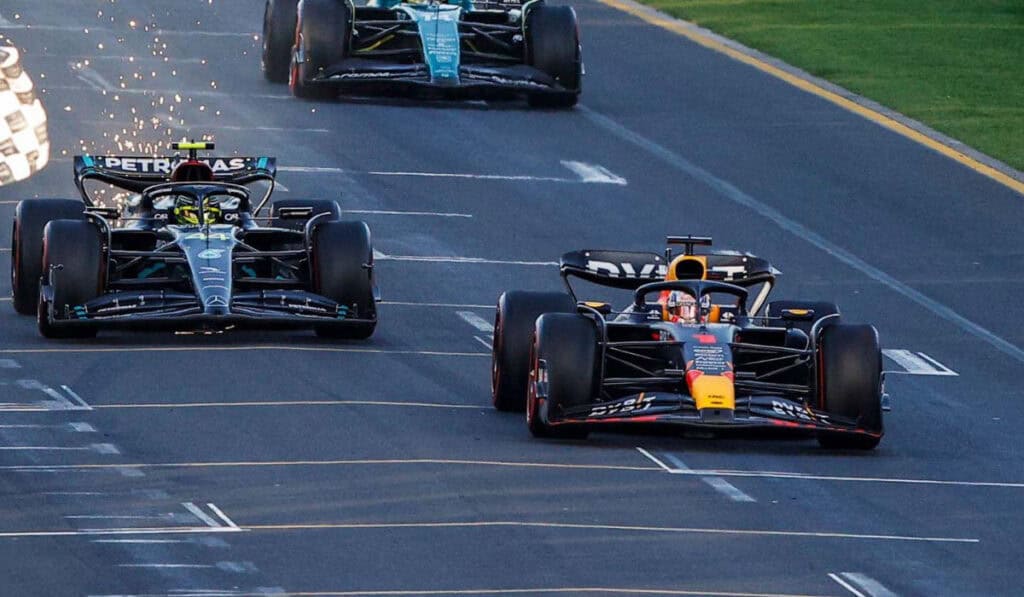
F1 cars have continually pushed the limits of speed, with official records highlighting peak performance under ideal conditions.
- Highest recorded modern F1 speed exceeds 370 km/h during straight-line tests.
- Track conditions, including altitude, temperature, and asphalt, significantly impact achievable speeds.
- Historical comparisons show turbo and V10 eras often reached comparable top speeds under certain conditions.
These numbers, however, are always context-dependent. Speeds vary based on car setup, aerodynamic configuration, track layout, and power unit output. While record books highlight peak velocities achieved on long straights, during most races cars operate below their absolute maximum to preserve tire life, manage fuel consumption, and protect engine components.
Teams like Red Bull Racing are known for optimizing this balance—prioritizing overall lap time and race strategy over sheer top speed. In modern Formula 1, efficiency and consistency across an entire stint often matter more than hitting the highest number on the speed trap.
Acceleration Explained: 0–100 km/h & 0–200 km/h
Acceleration defines the thrill of F1 racing. Cars can reach astonishing speeds in mere seconds.
- Modern F1 cars hit 0–100 km/h in approximately 2.5 seconds.
- 0–200 km/h acceleration is under 5 seconds, depending on track grip and power unit mode.
- Hybrid systems and ERS deliver bursts of energy that enhance acceleration beyond traditional combustion limits.
Acceleration isn’t just about the first straight. It affects corner exits, overtaking maneuvers, and overall lap time. Rapid energy deployment via ERS ensures that F1 cars balance raw power with strategic control throughout the race.
Track Influence – Monza vs Monaco
Circuit layouts drastically influence achievable speeds and racing dynamics.
- Monza, the “Temple of Speed,” favors long straights and minimal corners, allowing top velocities.
- Monaco’s tight streets require slow, precise handling, limiting straight-line speed to under 200 km/h in many sections.
- Aerodynamic setups are adjusted per track to balance grip and speed requirements.
Track-specific factors such as elevation changes, corner radius, asphalt texture, and overall grip levels make certain circuits inherently faster or slower than others. Engineers continuously adjust suspension settings, aerodynamic balance, and power unit calibration to extract maximum performance tailored to each venue’s unique demands.
Driver input is equally critical. For example, when a driver like Lewis Hamilton joined Scuderia Ferrari, adaptation to a new car philosophy, aerodynamic characteristics, and team setup approach became a key performance factor. In Formula 1, success isn’t just about raw speed—it’s about how well the car, driver, and track conditions align over an entire race weekend.
Engines, ERS & Hybrid Power Demystified
Modern F1 cars use advanced hybrid power units to combine speed, efficiency, and energy recovery.
- Internal combustion engines deliver 1000+ horsepower while maintaining efficiency over a race distance.
- ERS systems capture kinetic and thermal energy, adding temporary power boosts during acceleration.
- Energy deployment strategies are essential for overtakes and managing tire degradation.
Understanding the synergy between the internal combustion engine (ICE) and the Energy Recovery System (ERS) helps fans see why acceleration and top speed are only part of the equation. Modern F1 power units are engineered for precision, responsiveness, and long-run consistency rather than just peak output. This balance is part of Formula 1’s rich motorsport legacy, where technological evolution continuously reshapes performance standards.
Aerodynamics vs Raw Speed
Aerodynamics shapes the car’s performance as much as the engine does.
- Wings, diffusers, and bodywork generate downforce for cornering stability.
- Excessive downforce can reduce top speed on straights, requiring trade-offs.
- Teams balance aerodynamic efficiency with cooling and drag reduction for optimal lap times.
Raw speed is not the sole objective in Formula 1. Instead, the focus lies on total lap efficiency, where downforce allows cars to stay glued to the tarmac, brake later, and carry higher speeds through corners. This balance between drag and grip creates a crucial aerodynamics edge, often making the difference between winning and losing.
FIA Speed Limits & Regulations
Regulations define safe, fair, and competitive speed capabilities.
- FIA imposes restrictions on power unit components, energy deployment, and turbo pressure.
- Standardized chassis and safety measures limit extreme performance.
- Rules ensure cars remain challenging to drive but safe for drivers and spectators.
These regulatory limits also shape race strategy. Teams must carefully optimize car setup, tire management, energy deployment, and fuel consumption while staying within strict technical boundaries. This proves that Formula 1 success depends far more on intelligent engineering and strategic precision than on unrestricted speed.
Historically, the Scuderia Ferrari, McLaren, and Mercedes-AMG Petronas Formula One Team rank among the most successful F1 teams, not simply because of raw pace, but due to their ability to innovate within regulations and consistently execute race-winning strategies.
Fastest F1 Cars in History
Some F1 cars have become legends for their groundbreaking speed.
- Turbo era cars in the 1980s set raw speed benchmarks exceeding 340 km/h.
- V10 and V8 eras balanced speed with drivability and reliability.
- Hybrid era cars integrate ERS for acceleration while maintaining high efficiency.
Studying these cars reveals how engineering innovations continuously evolve to balance speed, safety, and race strategy, shaping modern design philosophy across motorsport and even road cars. Every aerodynamic refinement, hybrid development, and safety upgrade reflects a broader commitment to performance within strict regulations.
At the same time, technology alone does not define success. Formula 1 driver performance plays a decisive role, as drivers must extract maximum pace while managing tires, energy deployment, and race strategy. The synergy between advanced engineering and elite driver skill is what ultimately determines competitive advantage on track.
Why F1 Cars Aren’t Built for Top Speed Alone
Top speed is secondary to complete race performance.
- Lap time optimization requires cornering, braking, and tire management.
- Car setup prioritizes consistency across various track conditions.
- Drivers must balance aggression with energy conservation to win championships.
F1 cars are engineered for versatility. Even though they can reach incredible velocities, true performance is measured by lap time, reliability, and strategic execution throughout a race weekend.
Conclusion
Understanding F1 car speed is about far more than headline numbers. From explosive acceleration and advanced hybrid systems to finely tuned aerodynamics and track-specific setups, it’s the intricate blend of engineering and strategy that defines true performance.
F1 cars embody a precise balance between raw velocity and lap efficiency, proving that champions must be not only fast, but also calculated, adaptable, and consistent across every circuit. This constant evolution delivers exciting updates and thrilling moments, as teams push technological boundaries while drivers extract every fraction of performance on race day.
FAQs About F1 Speed
What is the fastest recorded speed of an F1 car?
The fastest F1 car speed officially recorded exceeds 370 km/h under ideal test conditions, though race speeds are typically lower due to track layout, aerodynamics, and safety regulations.
How quickly do modern F1 cars accelerate?
Modern F1 cars accelerate from 0–100 km/h in around 2.5 seconds and 0–200 km/h in under 5 seconds, thanks to hybrid systems and advanced energy recovery deployment.
Why do F1 cars go slower in Monaco than Monza?
Monaco’s tight corners, narrow streets, and slow chicanes limit straight-line speed, whereas Monza’s long straights and minimal turns allow cars to reach maximum velocity.
How does ERS affect acceleration and top speed?
ERS provides temporary power boosts by recovering energy from braking and heat, enhancing acceleration out of corners and slightly increasing straight-line speed during strategic deployment.
Are there F1 cars built purely for speed?
No; F1 cars prioritize lap times, which include cornering and braking performance. Straight-line speed is secondary to balanced performance, energy management, and consistent racing reliability.